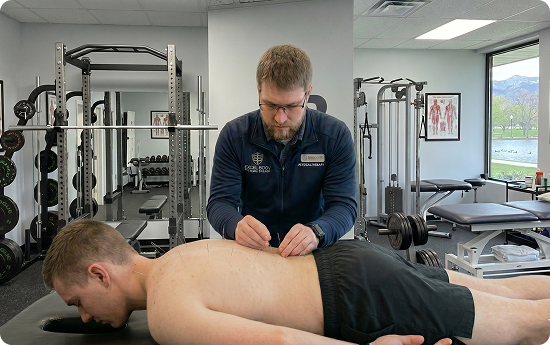
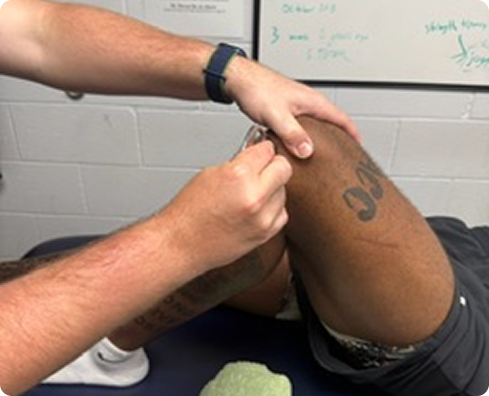
Dry needling is not a stand-alone fix for every problem, but for the right patient it can be a useful tool inside a well-designed rehab plan. VIP PT uses dry needling when it fits the clinical picture and the goals of the person in front of us.
Dry needling is a treatment technique that uses a very thin filament needle to target selected muscular trigger points or areas of tension. The goal may be to reduce sensitivity, improve movement tolerance, or make it easier to progress with exercise and hands-on care.
What it may help with
Dry needling may be considered for:
Muscular tightness or guarding
Trigger point-related discomfort
Selected overuse presentations
Movement restrictions linked to muscular tension
Pain that seems to respond well to a combined manual and exercise approach
What treatment feels like
Experiences vary. Some people feel very little. Others feel a brief twitch response, ache, or pressure in the muscle. Afterward, it is common to feel temporary soreness similar to a workout or manual treatment.
At VIP PT, dry needling is used thoughtfully. It is not something applied automatically to everyone with pain. It is considered when:
The pattern of symptoms suggests it may be useful
The patient is comfortable with the technique
It supports the larger rehab or performance goal
It makes sense alongside exercise, mobility work, or other treatment
Training and clinical background
Michael Smith holds trigger point dry needling training and applies the technique within a broader physical therapy model focused on evaluation, clinical reasoning, and individualized care.
When dry needling may not be the best fit
Some people simply do not want it, and that is okay. Others may have medical considerations, sensitivity, or goals that make another treatment path a better starting point. VIP PT will talk through that decision with you.
GOT A QUESTION?
Frequently Asked Questions
Is dry needling the same as acupuncture?
They are different systems and are used for different clinical purposes, even though both involve fine needles.
Does dry needling hurt?
Some people feel very little, while others feel a brief twitch, ache, or post-treatment soreness.
Will I still need exercises or other treatment?
Usually yes. Dry needling works best as part of a broader plan.
Can golfers and athletes benefit from dry needling?
Yes, when muscular tension or movement restriction is part of the problem.
Final CTA block
Wondering whether dry needling belongs in your plan? Start with an evaluation and VIP PT can guide you.
Ready for a clearer plan?
One-on-one care with Dr. Michael Smith. No hand-offs, no crowded treatment floor, no guessing.